Learn why a blouse may still fit poorly even when the measurements are accurate. This guide explains common causes such as incorrect pattern drafting, ease allowance, shoulder and bust adjustments, fabric behavior, and stitching errors—and shares practical tips to achieve a comfortable, well-fitted blouse.
Why Your Blouse Doesn’t Fit Even When Your Measurements Are Correct
Understanding blouse pattern fitting problems and the importance of a custom-fit pattern
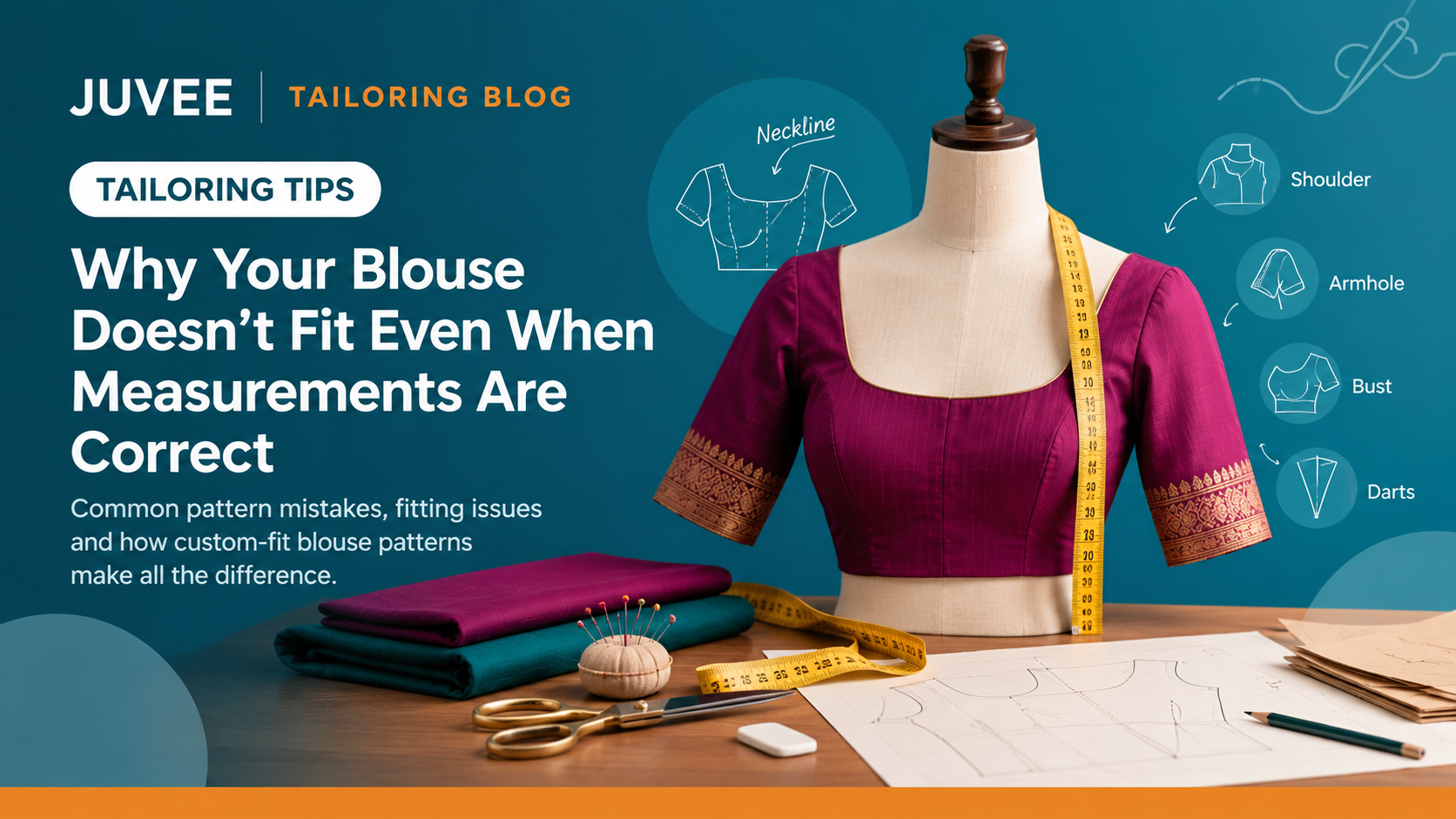
Have you ever taken your blouse measurements carefully, followed the same measurements while cutting, and still found that the finished blouse does not fit properly? The neckline may feel too tight, the armhole may pull, the bust area may have unwanted wrinkles, or the shoulder may not sit correctly. This is a common problem in blouse stitching, and the reason is often not the measurement itself—it is the pattern.
Why Correct Measurements Can Still Produce a Poor Fit
Measurements tell you the size of the body, but a pattern determines how those measurements are distributed and shaped on the garment. A small mistake in pattern drafting can change the way the blouse sits on the body.
1. Incorrect Bust and Dart Placement
Bust measurements alone are not enough. The position and depth of darts must match the body shape. When darts are placed incorrectly, the blouse can look loose in one area and tight in another, even when the overall bust measurement is correct.
2. Armhole Shape Is Not Suitable
The armhole affects both comfort and appearance. An armhole that is too deep can create unwanted looseness, while one that is too small can cause pulling and restrict movement.
3. Shoulder Width Is Miscalculated
A blouse can have the correct bust and waist measurements but still look wrong if the shoulder width is not accurate. The shoulder seam may move forward or backward, affecting the entire fit.
4. Neckline Measurements Are Not Balanced
Neckline fitting depends on more than the neck circumference. The front and back neckline shapes, depth, and construction must work together. An incorrect neckline pattern can make the blouse feel tight or sit away from the body.
5. Standard Patterns Do Not Match Every Body
Standard-size patterns are designed around general body proportions. Real bodies are different. Two people can have the same bust measurement but different shoulder widths, bust points, back widths, or body proportions.
Common Signs of a Blouse Pattern Problem
- Wrinkles or pulling around the bust
- The blouse feels tight near the armhole
- The shoulder seam does not sit in the correct position
- The neckline feels too tight or too loose
- The blouse rides up when you move your arms
- Darts do not point toward the correct bust position
- The back of the blouse has excess fabric or unwanted folds
The Difference a Custom-Fit Pattern Can Make
A custom-fit pattern is created using individual body measurements and proportions instead of relying only on a standard size chart. This helps the pattern account for important fitting points such as bust, shoulder, armhole, neckline, waist, and dart placement.
For tailors and customers, this can make the cutting process more predictable and reduce repeated alterations. Instead of correcting multiple fitting problems after stitching, the pattern itself can be prepared with the customer’s measurements in mind.
How to Improve Blouse Fitting
1. Take measurements carefully and consistently.
2. Do not depend only on bust, waist, and hip measurements.
3. Check shoulder width, armhole depth, bust point, and neckline measurements.
4. Make sure dart position matches the wearer’s body shape.
5. Use a pattern designed for the customer’s actual measurements.
6. Before final stitching, check important fitting areas and make necessary corrections.
Custom Fit Starts With the Right Pattern
A well-fitting blouse is not simply the result of taking accurate measurements. Accurate measurements need to be translated into an accurate pattern. When the pattern reflects the wearer’s body proportions, cutting and stitching become much easier, and the finished blouse can provide a cleaner, more comfortable fit.
If you are looking for measurement-based blouse patterns, explore the custom-fit pattern options available through SizeHub and choose a pattern prepared according to your requirements.
Final Takeaway
When a blouse does not fit, the problem is not always your measurements. The pattern plays a major role in how those measurements become a finished garment. Understanding dart placement, shoulder width, armhole shape, neckline balance, and individual body proportions can help reduce common fitting problems and produce better-fitting blouses.
Ready to find your perfect-fit pattern? Click here to explore SizeHub